Ever bought a “silver” ring? And wondered later if it was real?
You’re not alone.
A lot of people get confused. Especially with so many lookalikes out there.
So let’s clear things up.
Here’s everything you should know about 925 jewellery. Plus, simple ways to catch a fake before it fools you.
First, What Is 925 Jewellery?
925 means sterling silver.
It’s 92.5% pure silver. Mixed with 7.5% of another metal, usually copper.
Why mix it? Because pure silver alone is too soft. It bends. It scratches easily.
Adding copper makes it strong. Strong enough for rings, chains, and earrings you actually wear every day.
So if something is stamped 925, it means real silver was used to make it.
Why Do People Fake 925 Jewellery?
Simple answer: money.
Real silver costs something. Fake metals cost almost nothing.
So some sellers coat cheap metal with a thin layer of silver color. Or they stamp “925” on jewellery that has barely any real silver in it.
To your eyes, it might look just like the real thing.
But it won’t act like the real thing. Not over time.
Things You Should Know Before Buying 925 Jewellery
1. Not everything stamped 925 is genuine.
Sadly, some sellers fake the stamp too.
A stamp is a good first clue. But it’s not proof by itself.
2. Real 925 silver is never too cheap.
Silver has actual value as a metal.
If a “silver” bracelet costs less than a cup of coffee, something is off.
3. Sterling silver naturally tarnishes.
This is not a flaw. It’s science.
Silver reacts with air over time. It can turn a bit dark or dull.
This actually helps prove it’s real, not a problem to worry about.
4. Good sellers are transparent.
Trusted jewellers clearly mention the purity. They explain the metal used.
If a seller avoids your questions about the material, be cautious.
5. Weight matters.
Real silver has a certain heft to it.
Fake metals, like cheap alloys, often feel too light. Or oddly light for their size.
How to Check If Your Jewellery Is Fake
Let’s get into the actual tests. You can do most of these at home.
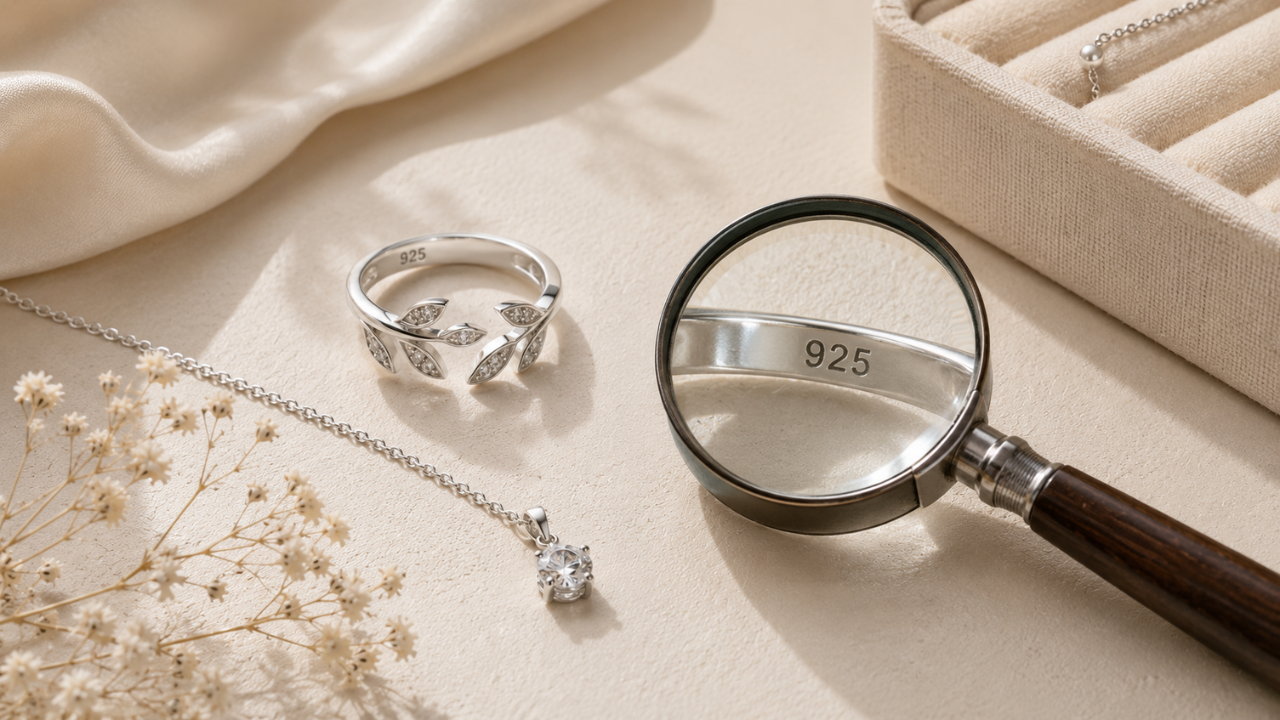
1. Look for the Stamp
Check the inside of a ring. The clasp of a necklace. The back of an earring.
Real 925 jewellery usually has a stamp. It says “925,” “S925,” or “Sterling.”
No stamp at all? That’s a red flag.
But remember, a stamp alone doesn’t guarantee it’s real.
2. Try the Magnet Test
Silver is not magnetic.
Hold a strong magnet near your jewellery.
If it sticks, or pulls hard, your piece likely isn’t real silver.
If nothing happens, that’s a good sign. But not 100% proof, since some fakes use non-magnetic metals too.
3. Do the Smell Test
Real silver has almost no smell.
If your jewellery smells metallic, or like copper coins, it may contain too much of a base metal, or none of the right one at all.
4. Try the Ice Cube Test
Silver is a great conductor of temperature.
Place an ice cube on your jewellery.
Real silver will melt it fast. Much faster than most fake metals.
Fake metals stay cooler for longer, and melt the ice slower.
5. Look for a Tarnish Reaction
Leave your jewellery out in open air for a while.
Real sterling silver slowly develops a light tarnish. A dull, sometimes darker tone.
Fake jewellery usually doesn’t tarnish the same way. Instead, it may chip. Peel. Or turn a strange color, like green or black patches that look uneven.
6. Try the Rubbing Test
Gently rub the jewellery with a soft white cloth.
If black marks appear on the cloth, that’s often a sign of real silver reacting with the fabric.
No marks at all? It might be a fake or heavily coated piece.
7. Check the Price and Seller
If the price feels too low for “real silver,” trust that instinct.
Buy from sellers who clearly mention 925 or sterling silver. Look for proper product descriptions. Check reviews too.
8. The Sound Test
Real silver, when lightly tapped or dropped gently, makes a soft, slightly ringing sound.
Fake metals often sound flatter, or duller, without much ring to them.
This test takes practice. But over time, your ear will notice the difference.
What If My Jewellery Fails One Test?
Don’t panic instantly.
No single test is fully perfect on its own.
Combine two or three tests together. The magnet test, plus the stamp, plus the price, usually gives a clear picture.
If you’re still unsure, a local jeweller can test it properly. Often for free, or a small fee.
Final Thoughts
925 jewellery is beautiful. It’s affordable. It’s a smart choice for daily wear.
But like anything valuable, it attracts fakes too.
The good news? You don’t need to be an expert to protect yourself.
A few simple checks. A little patience. That’s all it takes.
Now, next time you shop for silver, you’ll know exactly what to look for, and exactly how to avoid getting fooled.